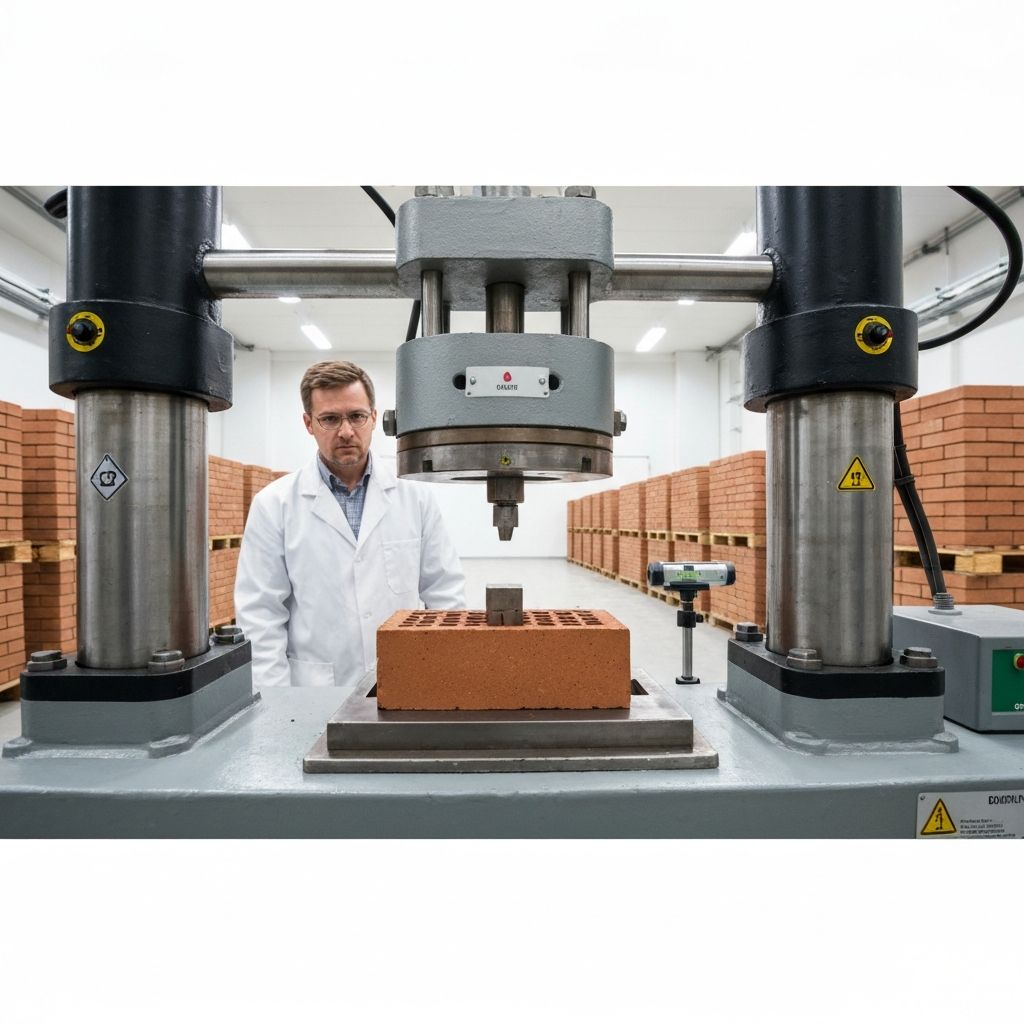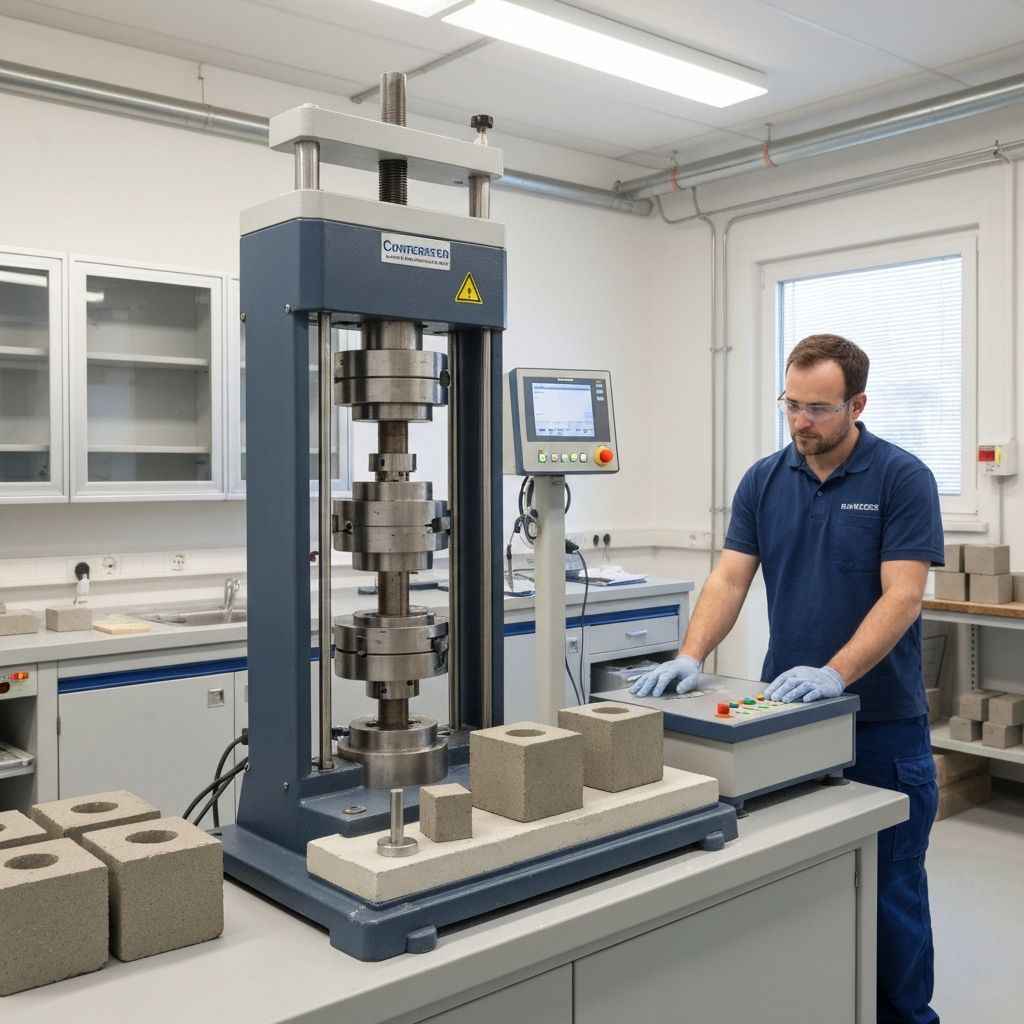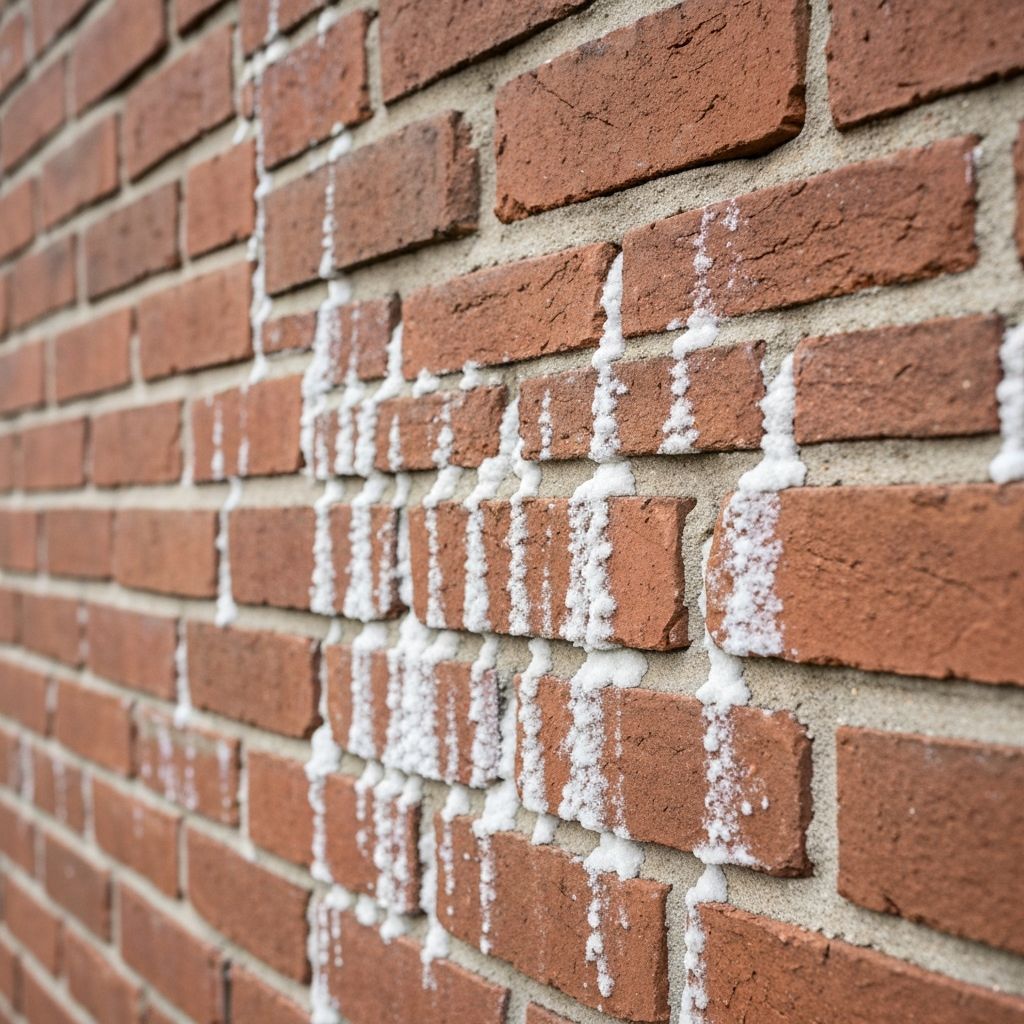
Bond strength between mortar and masonry units is critical for wall tensile and shear resistance. Poor bond leads to cracking, water infiltration, and reduced structural capacity. Bond strength testing verifies that mortar achieves adequate adhesion, proper curing occurred, and materials are compatible. Testing can be performed on small prisms in laboratory or on completed walls in field.
Understanding Mortar-Unit Bond
Bond develops through mechanical interlocking as mortar penetrates unit surface pores, suction of water from mortar into porous units creating intimate contact, and chemical adhesion. Bond strength is influenced by unit texture and absorption, mortar composition and water retention, curing conditions, and workmanship. Smooth, low-absorption units bond poorly. Optimal unit suction rate is 0.5-1.5 kg/m²/min.
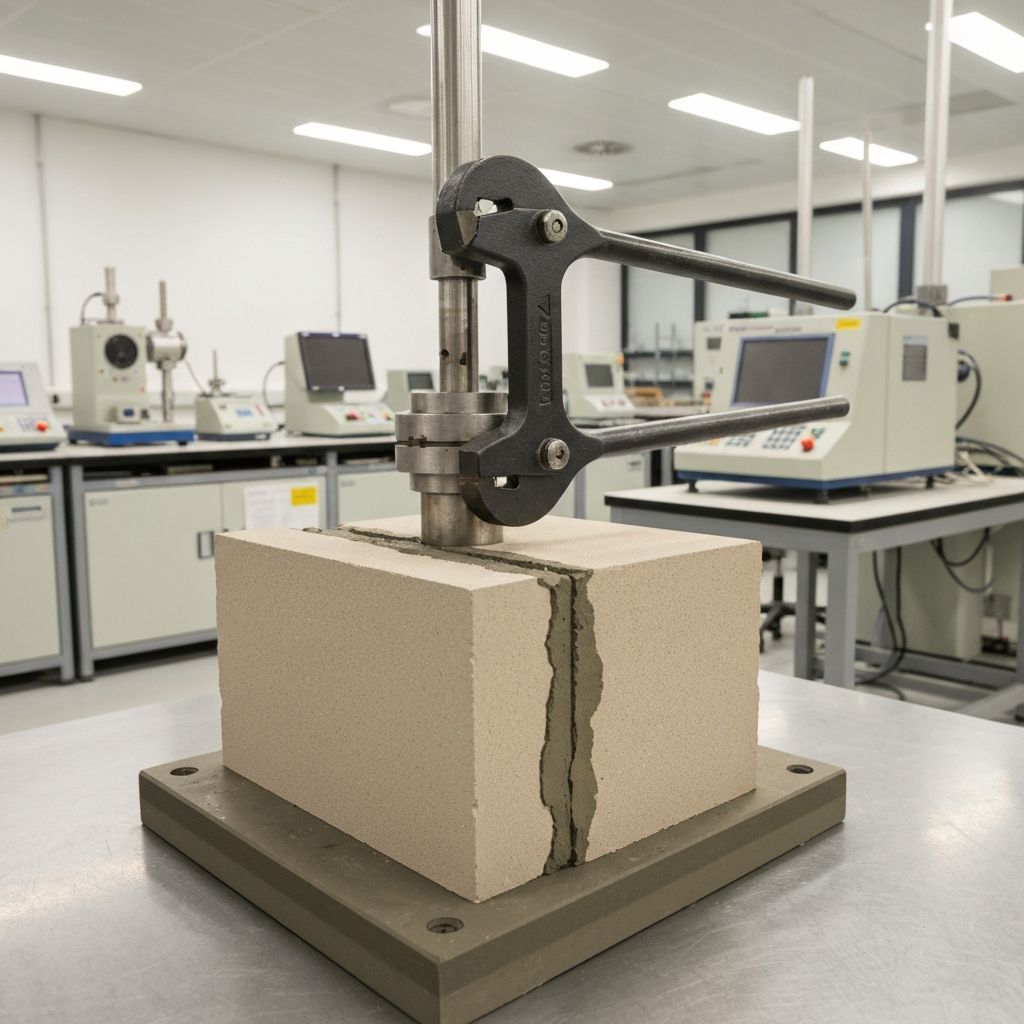
Flexural Bond Strength Test (Bond Wrench)
The bond wrench test applies bending moment to masonry prisms until mortar joint fails. Test assembly consists of two or more units bonded with mortar, cured 28 days. A lever-arm loading device (bond wrench) applies increasing moment to joint until failure. Flexural tensile strength calculated from failure moment and joint geometry.
- Prism construction: Typically 2-unit stack, full bed joints, cured 28 days at 90% RH
- Loading: Slowly increasing moment applied through bond wrench device
- Failure modes: Failure at mortar-unit interface (bond failure) or within mortar (mortar tensile failure)
- Typical values: 0.15-0.5 N/mm² for good bond with clay bricks
- Minimum 5 specimens tested per mix/unit combination
Shear Bond Testing
Shear bond tests measure resistance to sliding along mortar joint under compressive preload. Triplet test (EN 1052-3) uses three-unit prism with two mortar joints. Prism is compressed perpendicular to joints while shear load applied parallel to joints until sliding failure. Results determine initial shear strength and friction coefficient, essential for shear wall design.
Field Testing of Existing Masonry
Field bond tests verify quality of construction. Removable prism method extracts small sections (2-3 courses) from wall and tests in laboratory. In-place shear test uses hydraulic ram to apply shear parallel to bed joint while measuring displacement. Pull-off tests use bonded plates and tension load to separate units. Results guide assessment of existing buildings and repair specifications.
Conclusion
Bond strength testing ensures masonry achieves required tensile and shear capacity. Our laboratory performs flexural bond wrench and shear bond testing to EN standards. Contact us for masonry bond testing services.
Related Testing Services
- Brick Compression Testing
- Mortar Strength Testing
- Masonry Prism Testing
- Water Absorption Testing
Applicable Standards
Need This Testing Service?
Our accredited laboratories and field teams provide comprehensive testing services across Europe.
Contact Our Team