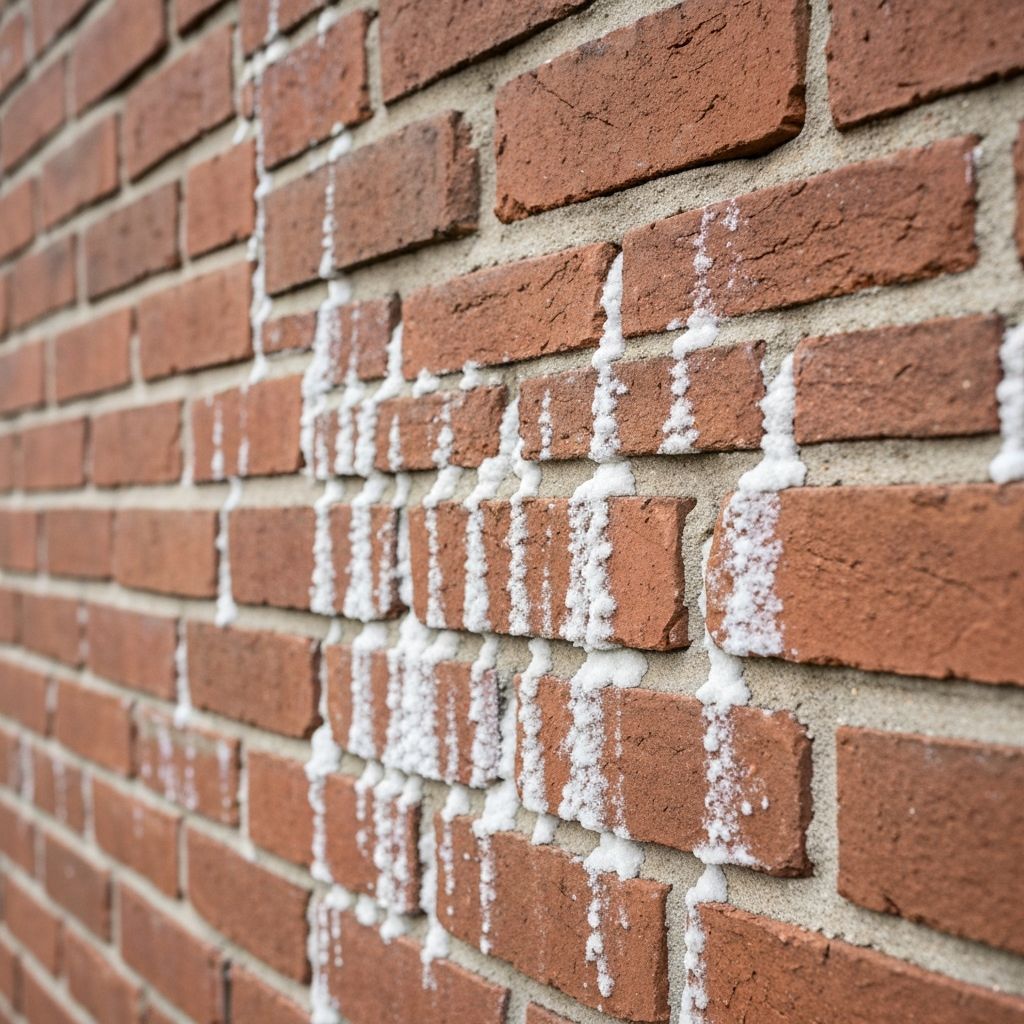
Efflorescence is the white crystalline deposit that appears on masonry surfaces when water-soluble salts migrate to the surface and crystallize. While typically cosmetic rather than structural, efflorescence indicates moisture problems and can cause client dissatisfaction. Testing evaluates material susceptibility to efflorescence and guides preventive measures in design and construction.
Understanding Efflorescence Mechanism
Efflorescence requires three conditions: presence of water-soluble salts in units, mortar, or groundwater; water to dissolve and transport salts; and evaporation pathway to surface. Salts typically include sodium, potassium, and calcium sulfates, carbonates, and chlorides. Primary sources are raw clay materials, cement, groundwater, de-icing chemicals, and atmospheric pollution. As water evaporates, salts concentrate and crystallize.
Efflorescence Testing Methods
EN 772-5 specifies water submersion method. Masonry units are partially submerged in distilled water for 7 days, then allowed to dry in controlled environment. Surface is examined after drying and rated for severity. Alternative rapid test uses boiling and freeze-thaw cycles to accelerate salt migration. Chemical analysis identifies salt composition, guiding remediation approach.
- Visual rating: None, slight, moderate, heavy, serious efflorescence
- Water-soluble sulfate content test: Quantifies potential for sulfate efflorescence
- Field assessment: Examine existing structures for efflorescence patterns
- Periodic monitoring: Photograph and document changes over time
Prevention Strategies
Material selection favors low-soluble-salt-content units and cement. Design details shed water away from masonry (overhangs, flashings, DPC). Construction practices include proper storage (keep materials dry), timely completion of weatherproofing, avoid contamination with soil or ground water, and protection from rain during construction. Vapor permeable sealers may reduce but not eliminate efflorescence.
Efflorescence Removal and Treatment
Initial efflorescence often self-cleaning through rain washing. Persistent deposits require removal. Water washing removes some salts but can worsen problem by introducing more moisture. Dry brushing removes surface deposits safely. Acidic cleaners dissolve efflorescence but require neutralization and thorough rinsing. Identify and eliminate moisture source to prevent recurrence. Sealers trap moisture and should only be used after problem solved.
Conclusion
Efflorescence testing identifies susceptible materials and guides prevention strategies. Our laboratory performs efflorescence potential testing and chemical analysis of salt deposits. Contact us for masonry durability testing services.
Related Testing Services
- Water Absorption Testing
- Soluble Salt Analysis
- Sulfate Content Testing
- Freeze-Thaw Testing
Applicable Standards
Need This Testing Service?
Our accredited laboratories and field teams provide comprehensive testing services across Europe.
Contact Our Team