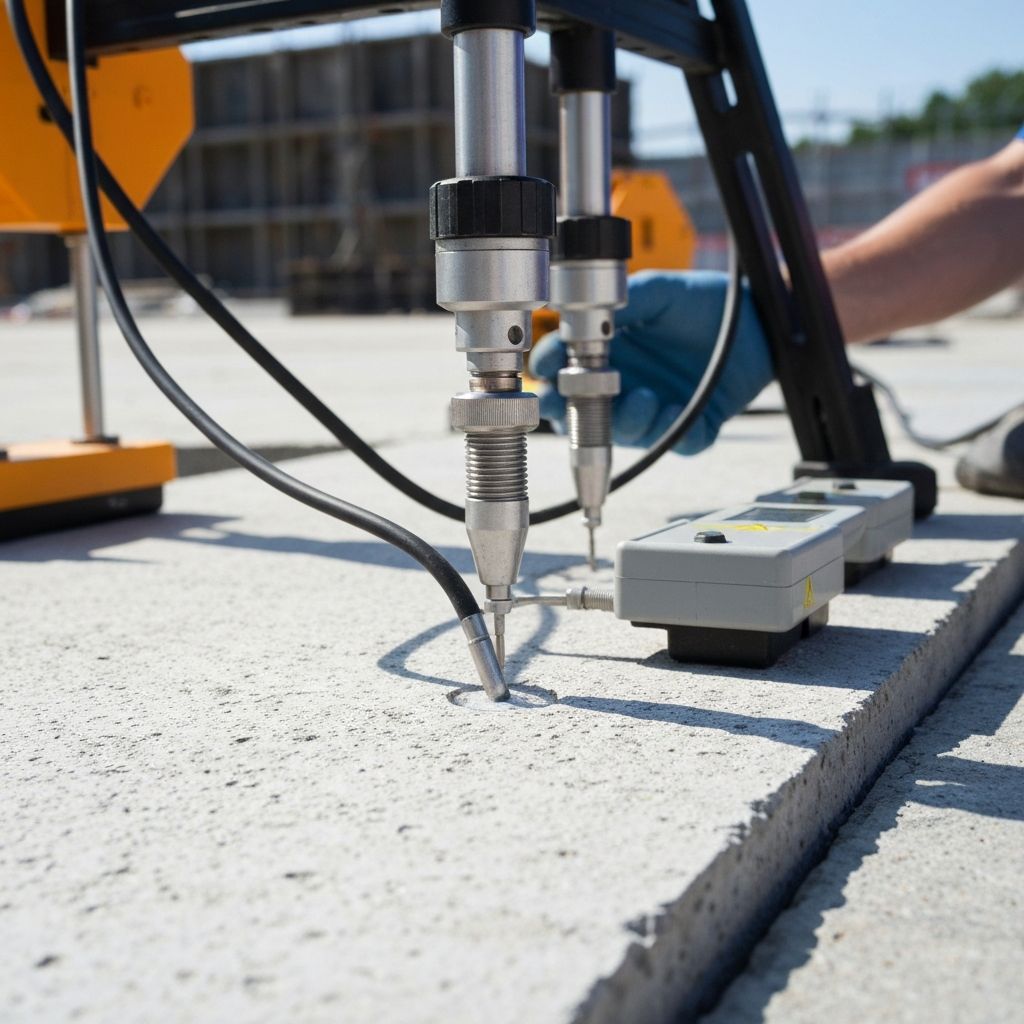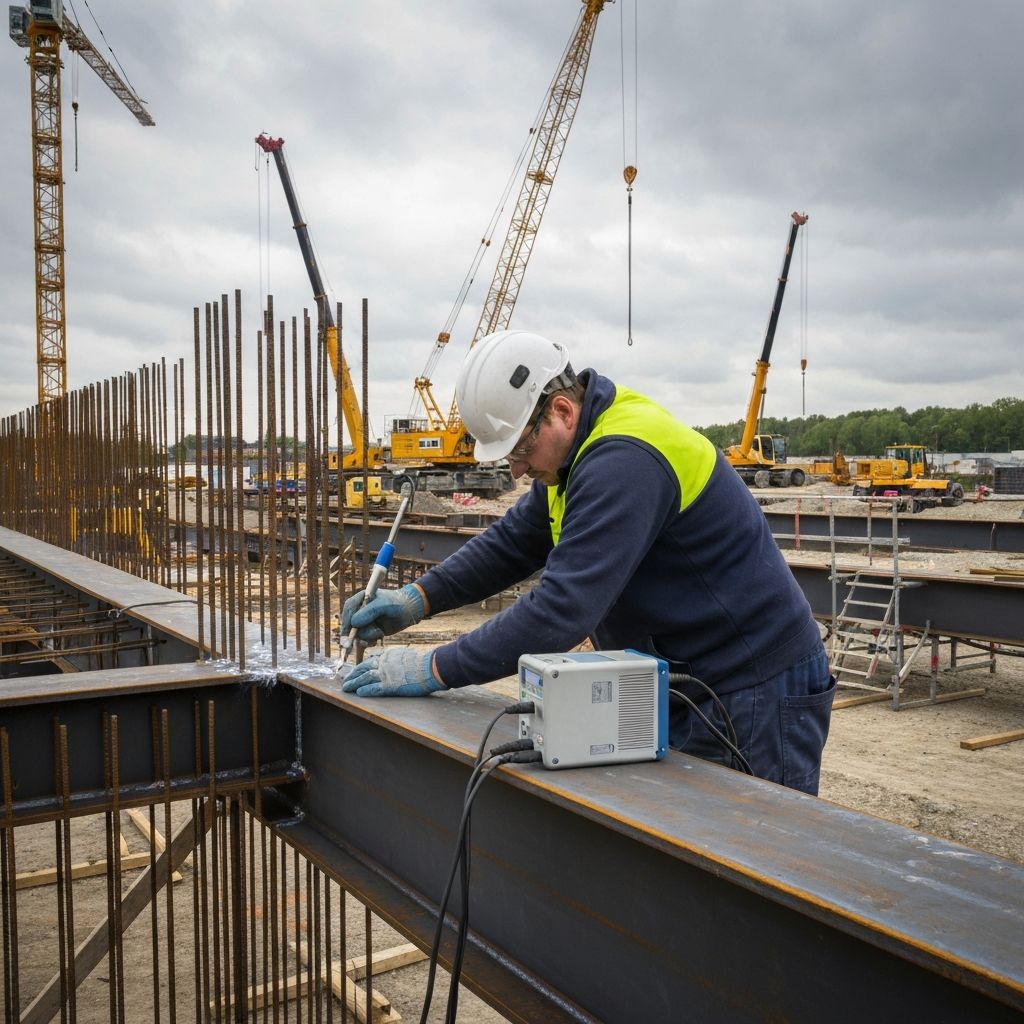
Weld quality directly affects structural integrity and safety. Non-destructive testing (NDT) detects internal defects invisible to visual inspection, including lack of fusion, porosity, cracks, and inclusions. Ultrasonic (UT) and radiographic (RT) testing are primary methods for critical weld inspection in building construction, bridges, pressure vessels, and steel structures requiring certified weld quality.
Common Weld Defects and Their Consequences
Weld defects include cracks (most serious, stress concentration sites), lack of fusion (incomplete bonding between weld and base metal or between weld passes), porosity (gas bubbles trapped in weld), slag inclusions (non-metallic particles), undercut (groove at weld toe), and incomplete penetration. These defects reduce weld strength, can initiate fatigue cracks, and cause premature failure under service loads.
Ultrasonic Testing (UT) Method
UT uses high-frequency sound waves (2-10 MHz) transmitted through material. Waves reflect from defects, generating echoes displayed on screen. Operator interprets echo patterns to identify defect location, size, and type. UT advantages include portable equipment, no radiation hazard, excellent crack detection, and through-thickness inspection capability. Skilled operator interpretation is critical for reliable results.
- Contact methods: Angle beam probes for weld inspection, compression wave probes for thickness
- Phased Array UT: Multiple element probes enable rapid scanning and detailed imaging
- TOFD (Time of Flight Diffraction): Advanced technique for precise defect sizing and location
- Typical applications: Butt welds, fillet welds >6mm, thick sections, crack detection
Radiographic Testing (RT) Method
RT exposes welds to X-rays or gamma rays, creating images on film or digital detectors. Denser areas (sound metal) appear lighter; less dense areas (defects, porosity) appear darker. RT provides permanent records, excellent for detecting volumetric defects, and doesn't require skilled real-time interpretation. Disadvantages include radiation safety requirements, limited crack detection (perpendicular cracks invisible), and access requirements to both sides of weld.
Inspection Standards and Acceptance Criteria
EN ISO 5817 defines quality levels for steel welds (B - stringent, C - intermediate, D - moderate). EN ISO 17640 (UT) and EN ISO 17636 (RT) specify testing techniques. Execution standards (EN 1090 for structural steel) require NDT percentage based on consequence class and production category. Typically 5-100% of critical welds are tested. Rejected welds are repaired by grinding out defect area, rewelding, and retesting.
Conclusion
Non-destructive weld testing ensures structural integrity and specification compliance of critical welds. Our certified NDT Level 2/3 inspectors perform UT and RT to international standards. Contact us for comprehensive weld inspection services.
Related Testing Services
- Visual Weld Inspection
- Magnetic Particle Testing
- Dye Penetrant Testing
- Macro Examination
Applicable Standards
Need This Testing Service?
Our accredited laboratories and field teams provide comprehensive testing services across Europe.
Contact Our Team