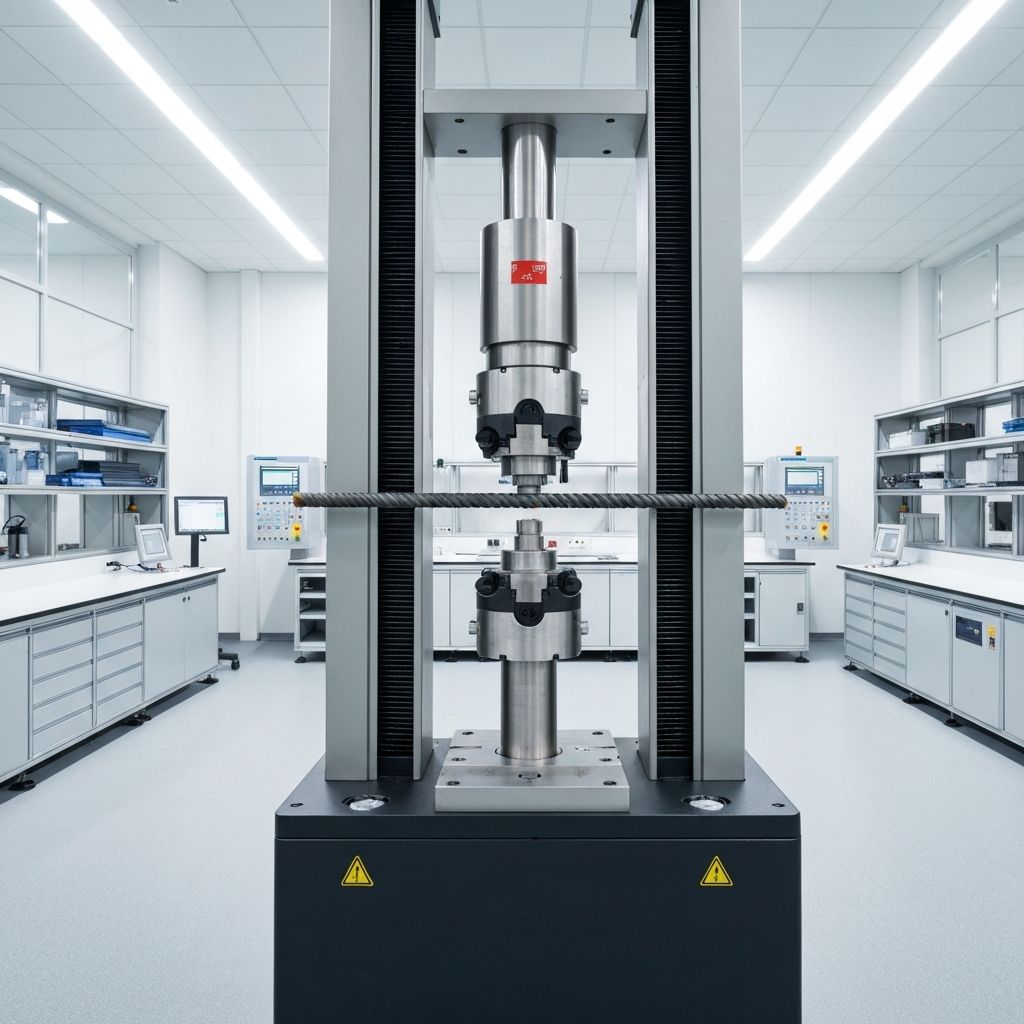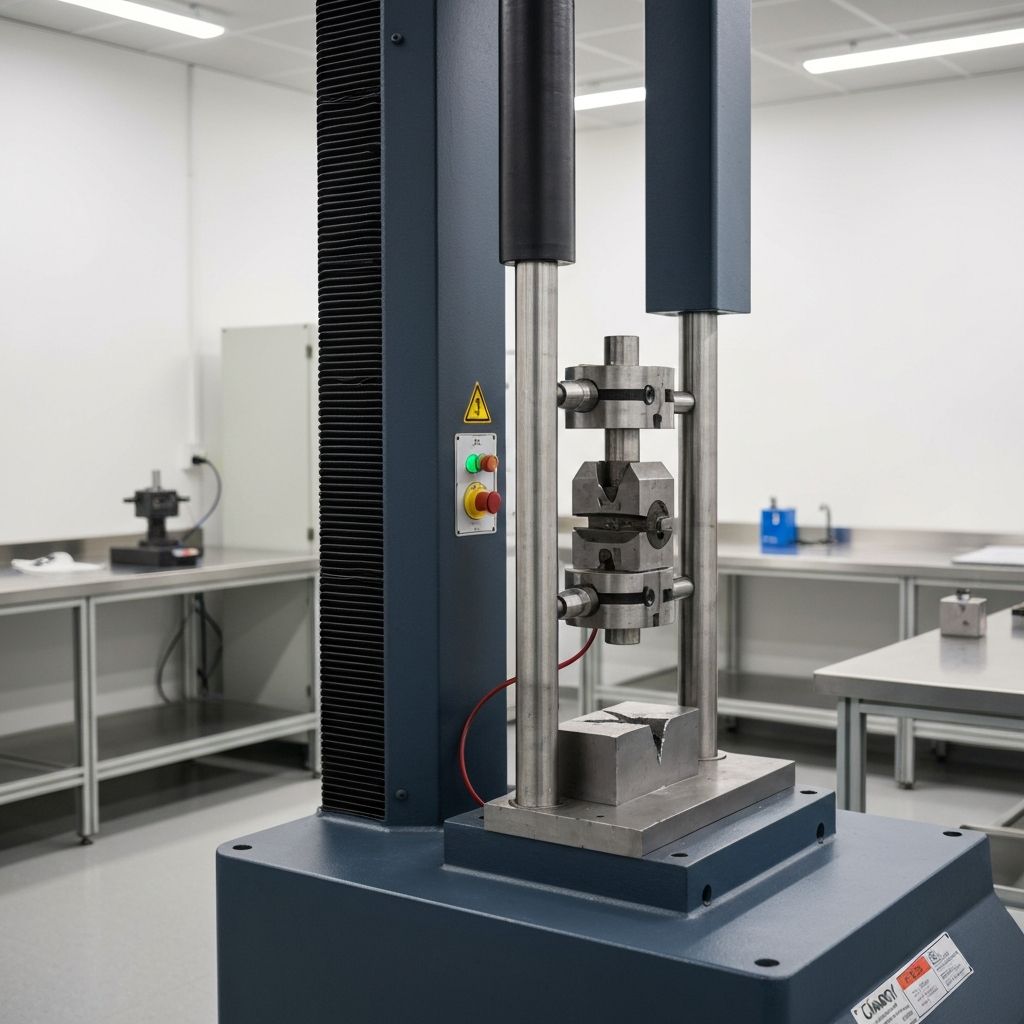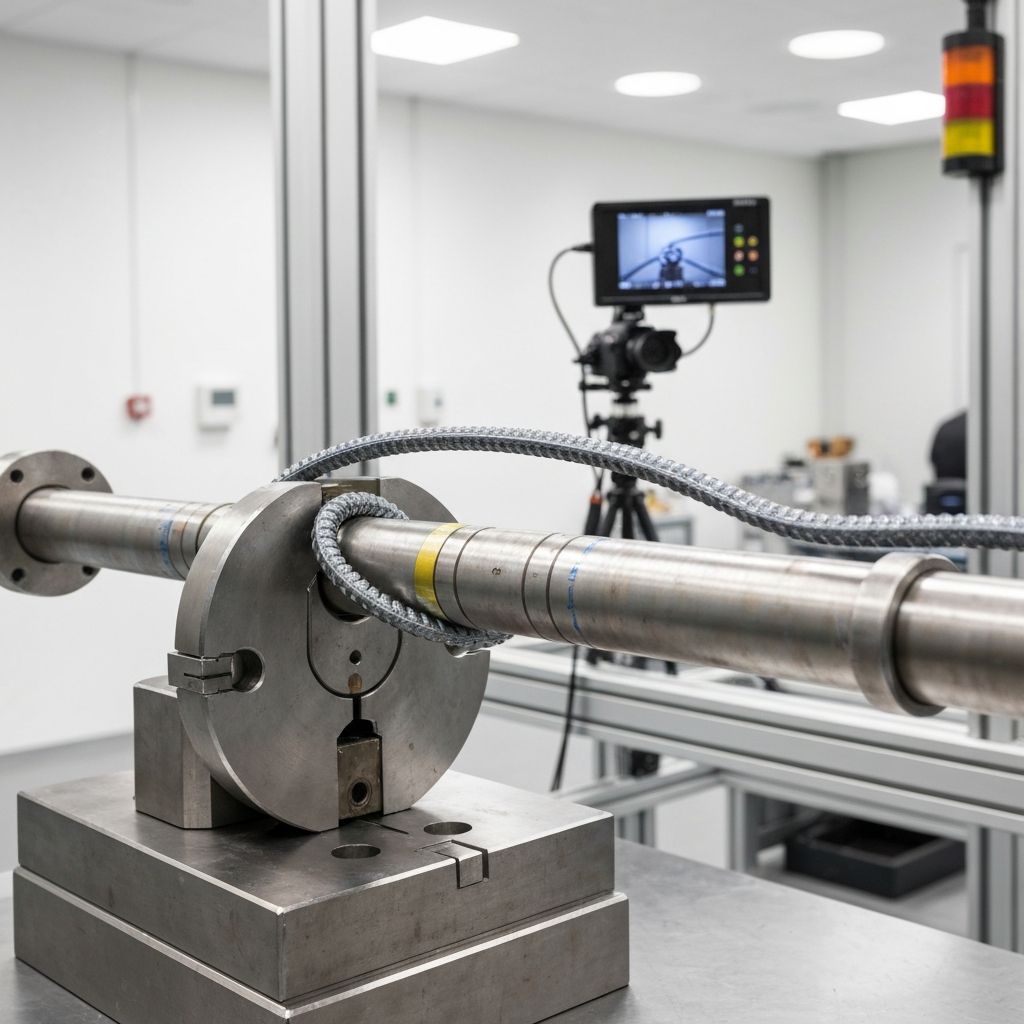
Bend testing evaluates the ductility and internal soundness of steel by bending specimens around a mandrel to a specified angle. It's a critical quality control test for reinforcing bars, detecting internal defects, surface imperfections, and brittleness that could cause premature failure during installation or service. Bend testing is mandatory for reinforcement acceptance in construction projects.
Purpose of Bend Testing
The bend test reveals material defects that may not be apparent from tensile testing alone. As steel is bent, the outer surface experiences tensile stress while the inner surface is compressed. Defects like laminations, cracks, or brittle inclusions will cause cracking or fracture during bending. The test also verifies that reinforcement can be bent on-site without cracking, which is essential for construction practicality.
Test Procedure
Steel specimens are bent 180° (or 90° for some applications) around a mandrel of specified diameter. The mandrel diameter depends on bar size and steel grade - typically 4-5 times the bar diameter for ductile grades. Bending is performed slowly and continuously. After bending, the specimen is examined for cracks, fractures, or defects on the outer tensile surface.
- Specimen length: Minimum 5 times bar diameter or 200mm
- Mandrel diameter: 4d for B500B/B500C, 6d for less ductile grades
- Bending angle: 180° returned on itself, or 90° depending on standard
- Acceptance: No cracks visible to unaided eye
- Re-bend test: Optional test measuring reverse bend capacity
Standards and Acceptance Criteria
EN 10080 and BS 4449 specify bend test requirements for reinforcing steel. B500A and B500B grades must successfully complete 180° bend without cracking. The mandrel diameter varies by grade and bar size. Welded bars are tested with the weld at the maximum stress location (center of bent section). Any visible crack constitutes failure, though minor surface roughness is acceptable.
Bend Testing for Welds
Bend testing is the primary acceptance test for welded connections in reinforcement. The weld is positioned at the center of the bent section where stress is highest. Side bend, face bend, and root bend configurations assess different aspects of weld quality. Failed welds indicate inadequate procedure, incorrect parameters, or unsuitable material. Weld bend testing is essential for earthquake-resistant construction where ductility is critical.
Conclusion
Bend testing is essential for verifying reinforcement quality and weldability. Our laboratory performs bend testing to European and international standards with calibrated equipment. Contact us for reinforcing steel testing services.
Related Testing Services
- Tensile Testing
- Weld Testing
- Rib Geometry Measurement
- Chemical Analysis
Applicable Standards
Need This Testing Service?
Our accredited laboratories and field teams provide comprehensive testing services across Europe.
Contact Our Team