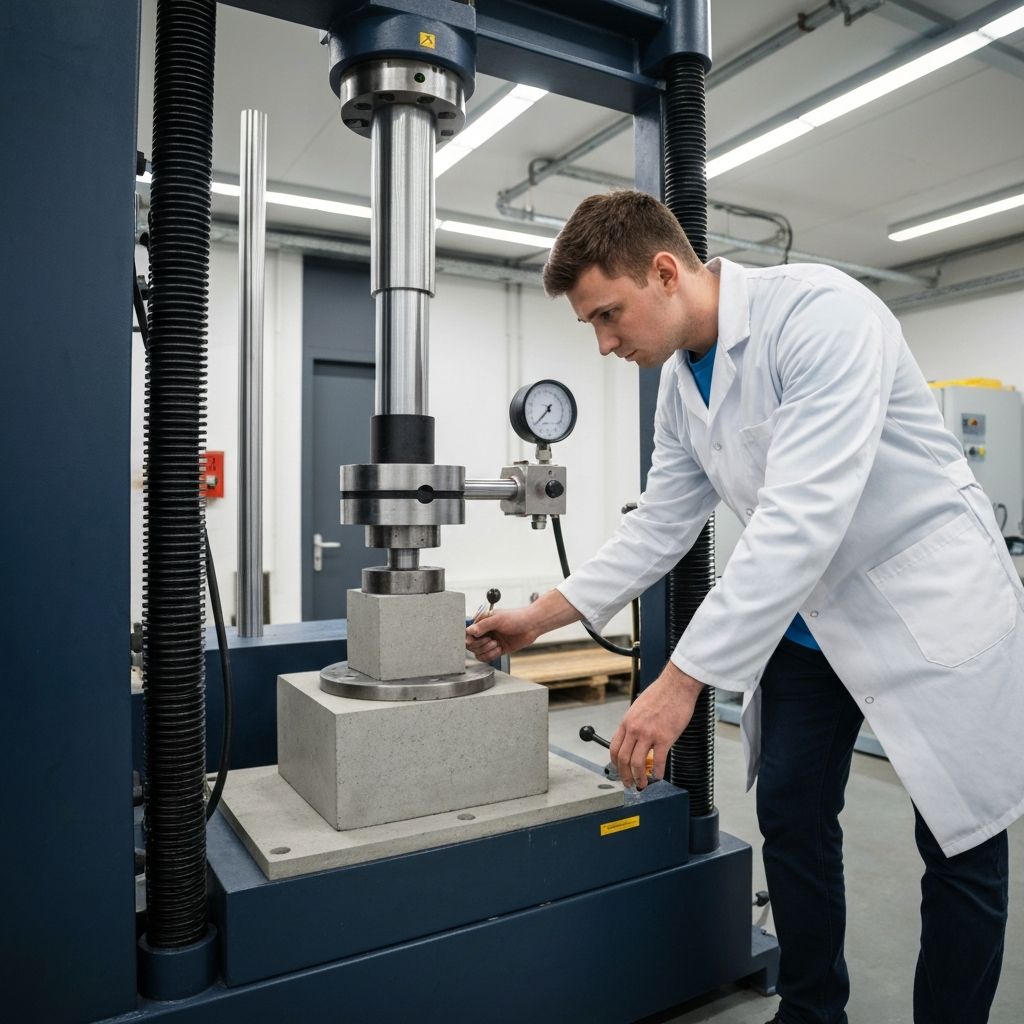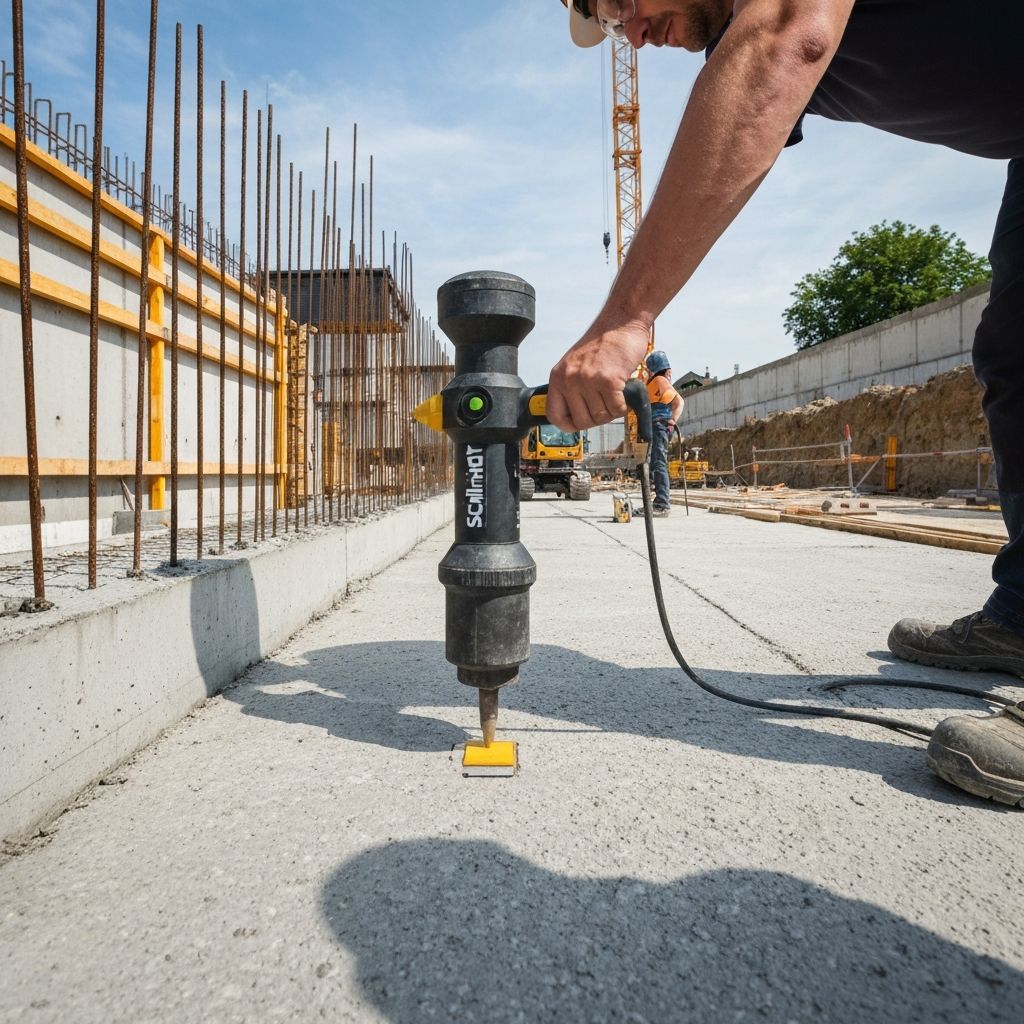
The rebound hammer (Schmidt hammer) is a simple, portable device for non-destructive testing of concrete surface hardness. It provides rapid strength estimation, quality verification, and uniformity assessment without damaging structures. While less accurate than core testing, the rebound hammer enables testing at numerous locations quickly and economically, making it valuable for large-scale condition surveys.
How Rebound Hammer Works
The device contains a spring-loaded mass that impacts a plunger pressed against concrete surface. The mass rebounds based on surface hardness, with rebound distance measured on a scale (0-100). Harder, higher-strength concrete produces higher rebound numbers. The test is affected by surface texture, moisture, carbonation, and aggregate hardness. Multiple readings at each location improve reliability.
Testing Procedure
Smooth the test surface by grinding if necessary to remove loose material or coatings. Hold the hammer perpendicular to the surface with firm pressure. Activate the plunger and record rebound number. Take at least 12 readings distributed over 300mm area at each test location. Discard readings differing by more than 6 units from average. Calculate mean of remaining valid readings.
- Test on smooth, clean, dry surfaces for consistent results
- Avoid areas with reinforcement near surface (<20mm cover)
- Perform testing perpendicular to surface for standard correlation curves
- Temperature range: 10-30°C for accurate results
- Grid pattern testing to map strength variations across structure
Strength Correlation and Calibration
Rebound number correlates with compressive strength using manufacturer calibration curves (typically for type N hammer). However, strength estimates have ±25% uncertainty. Project-specific calibration by testing cores from same concrete significantly improves accuracy. Correlations are affected by concrete age, moisture condition, aggregate type, and carbonation depth. Calibration curves should be developed for critical projects.
Applications and Limitations
Rebound hammer assesses concrete uniformity, identifies weak areas, evaluates formwork removal timing, and monitors strength gain. It's excellent for comparative testing and quality verification. Limitations include: only tests surface layer (25-30mm depth), affected by surface preparation and moisture, less accurate than core testing, and correlation curves may not apply to unusual mixes. Results should be combined with other assessment methods.
Conclusion
Rebound hammer testing provides quick, economical concrete quality assessment over large areas. Our technicians perform rebound hammer surveys following EN standards with proper calibration. Contact us for non-destructive concrete testing services.
Related Testing Services
- Ultrasonic Pulse Velocity
- Core Sampling
- Pull-Off Testing
- Windsor Probe
Applicable Standards
Need This Testing Service?
Our accredited laboratories and field teams provide comprehensive testing services across Europe.
Contact Our Team