Concrete compressive strength testing is the most fundamental quality control test performed on concrete specimens. It determines the load-bearing capacity of concrete and verifies that it meets design specifications. This test is critical for structural integrity and is required on virtually every construction project in Europe and globally.
Why Compressive Strength Testing Matters
The compressive strength of concrete directly affects the structural capacity of buildings, bridges, and infrastructure. Testing ensures that the concrete mix design achieves the required strength, that materials are properly proportioned, and that curing conditions are adequate. Inadequate strength can lead to structural failures, costly repairs, or complete reconstruction.
Testing Methods and Standards
European and international standards govern concrete strength testing to ensure consistency and reliability. The primary methods include:
- Cube Test (EN 12390-3): 150mm cubes tested at 7, 14, and 28 days
- Cylinder Test (ASTM C39): 150x300mm cylinders commonly used in North America
- Core Testing (EN 12504-1): Extracted from hardened concrete structures
- Schmidt Hammer (EN 12504-2): Non-destructive surface hardness testing
Test Procedure Overview
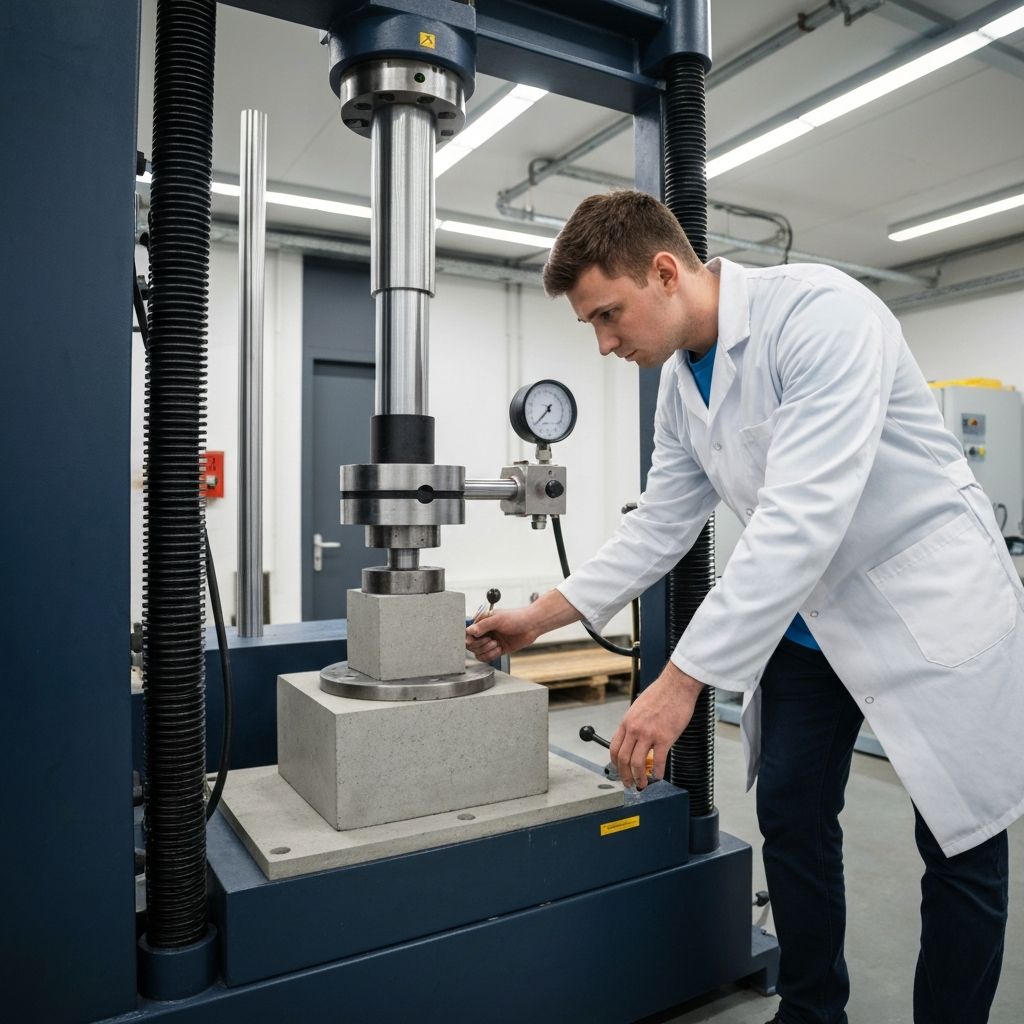
Concrete samples are cast during placement, cured under controlled conditions (20°C ± 2°C in water or humidity chamber), and tested at specified ages. The specimens are loaded continuously until failure in a compression testing machine. The maximum load divided by the cross-sectional area gives the compressive strength in MPa or N/mm².
Interpreting Results and Acceptance Criteria
Results are compared against the design strength (fck) specified in project documents. EN 206 requires that the mean strength of any group of four consecutive test results meets the characteristic strength plus 4 MPa, and no individual result is more than 4 MPa below the characteristic strength. Failed tests trigger investigation and potential remedial actions.
Conclusion
Compressive strength testing is essential for quality assurance in concrete construction. Our accredited laboratories perform testing to EN, ASTM, and BS standards with fast turnaround times. Contact us to discuss your concrete testing requirements.
Related Testing Services
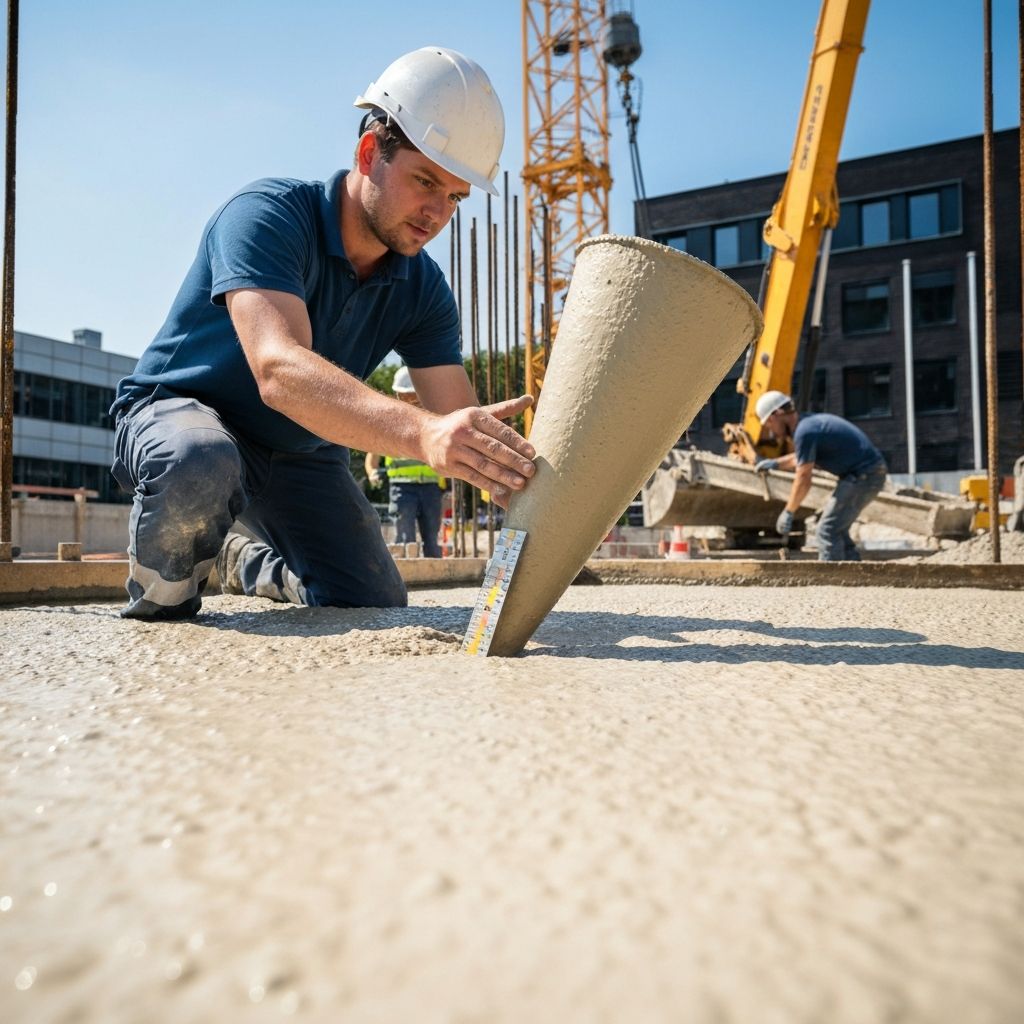
- Slump Testing
- Air Content Testing
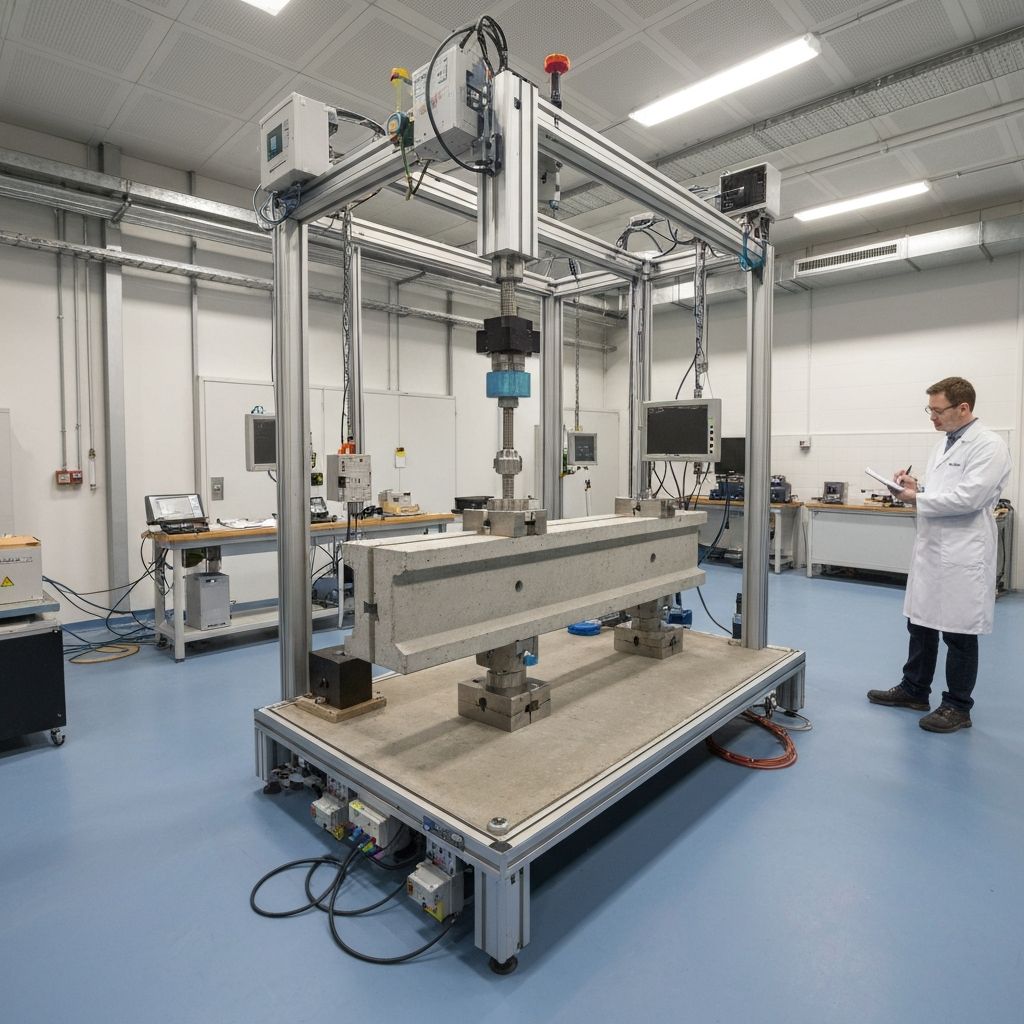
- Flexural Strength Testing
- Core Sampling
Applicable Standards
Need This Testing Service?
Our accredited laboratories and field teams provide comprehensive testing services across Europe.
Contact Our Team