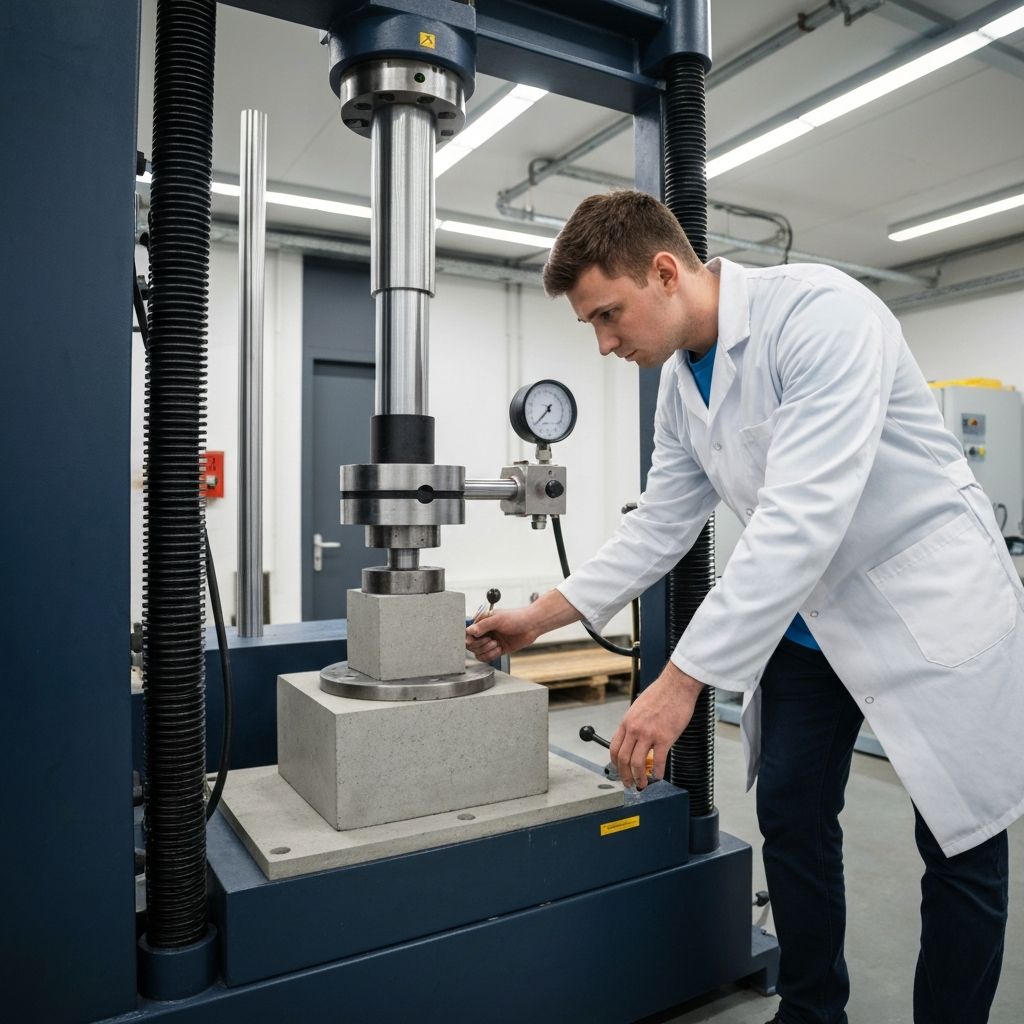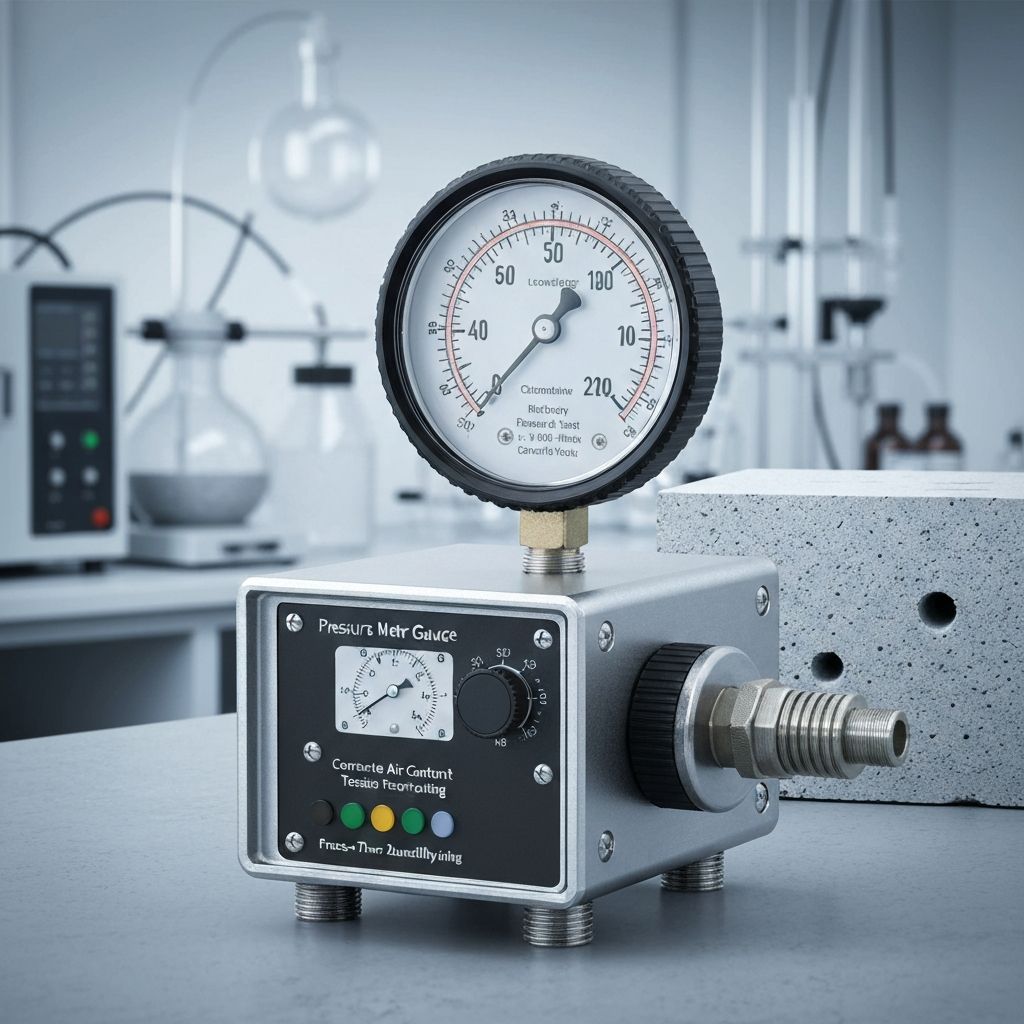
Air content testing measures the volume of air voids in fresh concrete, which is critical for freeze-thaw durability in cold climates. Properly entrained air creates microscopic air bubbles that provide space for water to expand when it freezes, preventing concrete from cracking and spalling. This test is mandatory for concrete exposed to freezing conditions throughout Europe.
Why Air Entrainment is Essential
In cold climates, water absorbed in concrete pores can freeze and expand by approximately 9%, generating destructive internal pressures. Entrained air bubbles act as pressure relief valves, accommodating this expansion. Without adequate air content, concrete will deteriorate rapidly through freeze-thaw cycles, especially on roads, parking structures, and exterior elements exposed to de-icing salts.
Testing Methods
Two primary methods are used for measuring air content in fresh concrete:
- Pressure Method (EN 12350-7, ASTM C231): Most accurate for dense aggregates, uses pressure to compress air and measures volume change
- Volumetric Method (ASTM C173): Direct measurement by agitation with isopropyl alcohol, suitable for lightweight aggregates
- Typical target: 4-7% air content for freeze-thaw exposed concrete
- Test frequency: Every truck or every 150m³, whichever is more frequent
Factors Affecting Air Content
Air content can be influenced by mixing time, temperature, aggregate characteristics, water-cement ratio, and admixtures. Over-mixing can reduce air content. High temperatures accelerate loss of entrained air. Admixtures like superplasticizers can affect air entrainment and must be carefully balanced with air-entraining agents.
Acceptance Criteria and Corrections
EN 206 specifies air content ranges based on exposure class and maximum aggregate size. Typical specification is 4.0% ± 1.5%. If air content is too low, additional air-entraining admixture can be added at the batch plant. If too high, the batch may need to be rejected or used in non-critical applications with engineer approval.
Conclusion
Air content testing is non-negotiable for durable concrete in freezing environments. Our technicians perform accurate pressure method testing on-site with calibrated equipment. Contact us for comprehensive fresh concrete testing services.
Related Testing Services
- Slump Testing
- Temperature Testing
- Compressive Strength Testing
- Freeze-Thaw Testing
Applicable Standards
Need This Testing Service?
Our accredited laboratories and field teams provide comprehensive testing services across Europe.
Contact Our Team