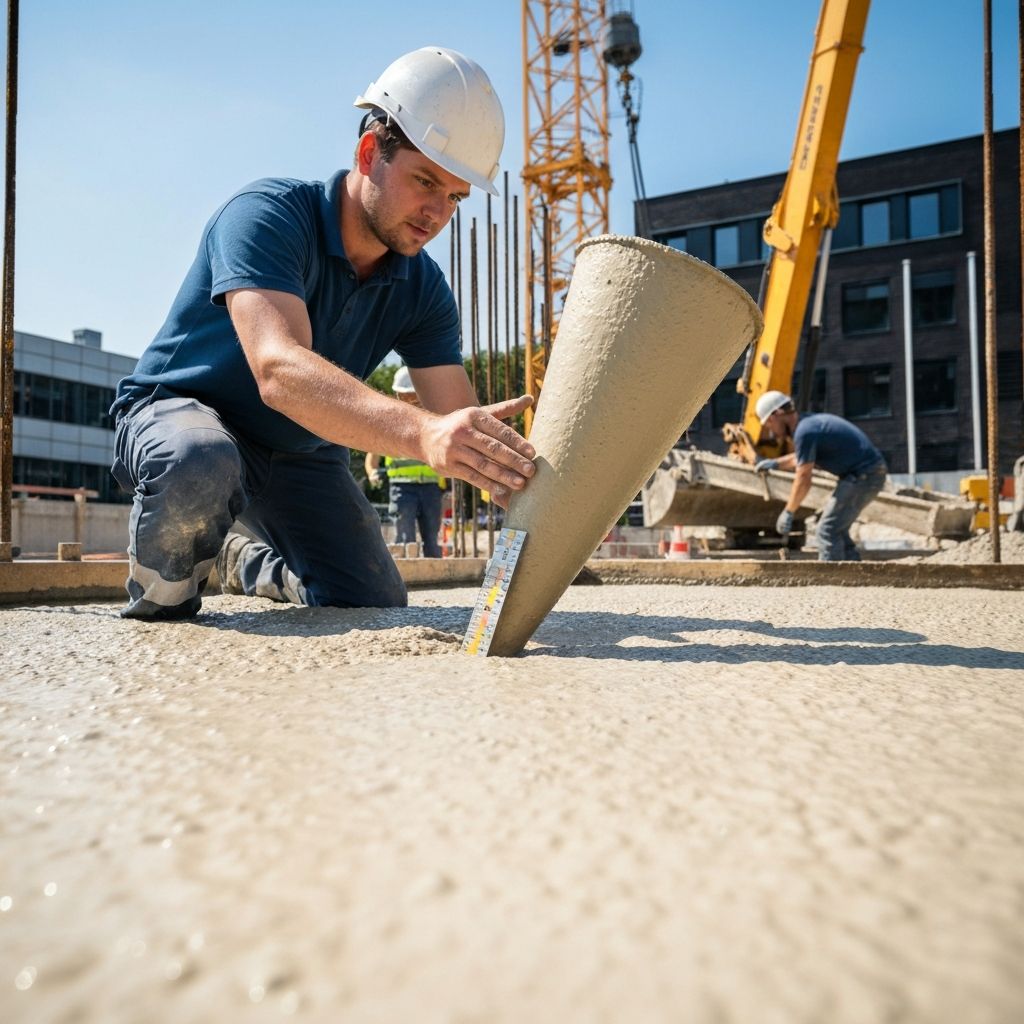
Flexural strength testing measures concrete's ability to resist bending forces, which is critical for pavement design, floor slabs, and other applications where tensile stresses develop at the bottom surface. The modulus of rupture determined from beam tests is used directly in pavement thickness calculations and structural design of concrete slabs.
Why Flexural Testing is Important
Unlike compressive strength, flexural strength directly represents concrete's behavior under bending loads. Pavements, airport runways, and industrial floors experience flexural stresses from wheel loads. The flexural strength is typically 10-15% of compressive strength. Testing beams provides more realistic performance data than compression tests alone.
Testing Methods
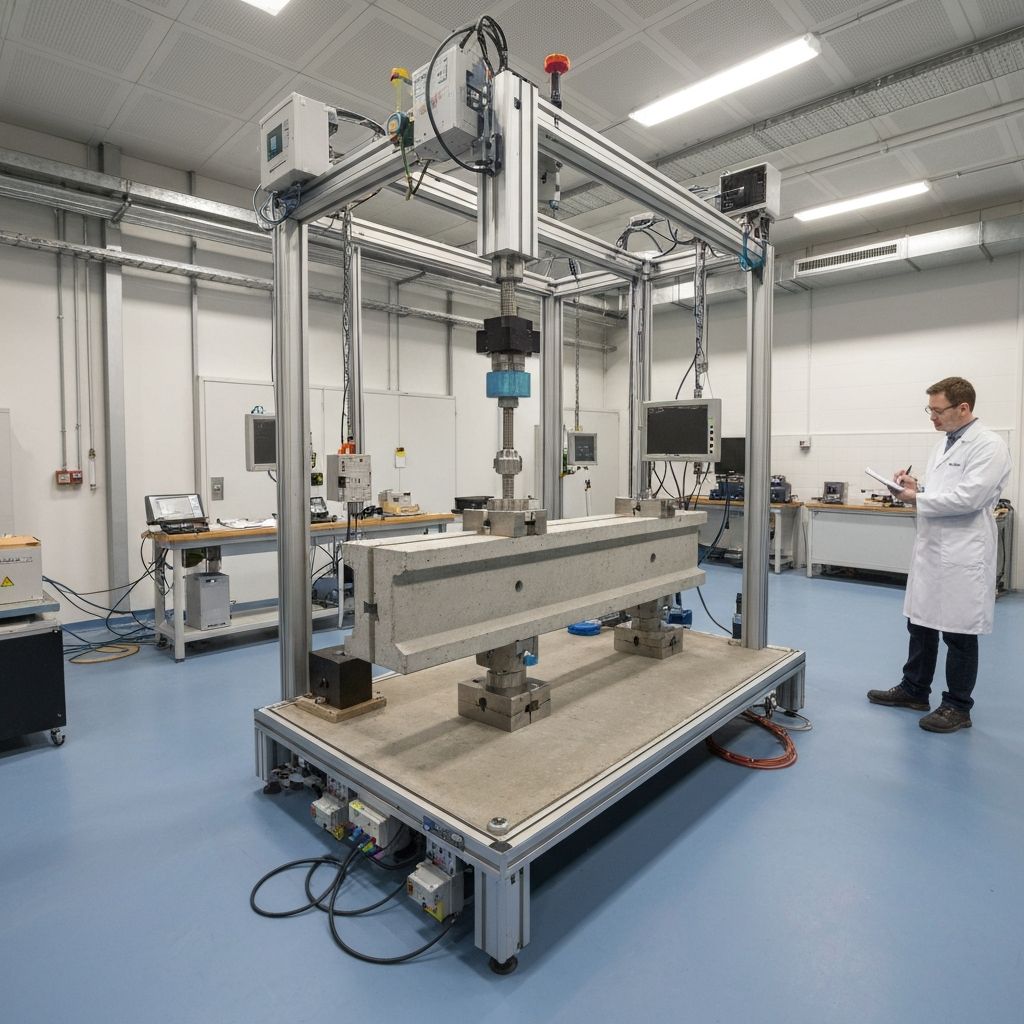
Two loading configurations are standardized for flexural testing:
- Third-Point Loading (EN 12390-5, ASTM C78): Load applied at two points, creates pure bending zone between loads
- Center-Point Loading (ASTM C293): Single load at midspan, simpler but produces non-uniform stress distribution
- Specimen size: Typically 150x150x600mm beams
- Testing age: Usually 28 days, may include 7-day tests
- Support span: 450mm for 150mm depth beams (span-to-depth ratio of 3:1)
Calculating Modulus of Rupture
The modulus of rupture (flexural tensile strength) is calculated from the failure load, beam dimensions, and span length. For third-point loading: fr = PL/bd², where P is failure load, L is span, b is width, and d is depth. Results are expressed in MPa. Typical values range from 3-5 MPa for normal concrete to 7+ MPa for high-strength mixes.
Applications in Pavement Design
FAA, FAARFIELD, and European pavement design methods use flexural strength as the primary input parameter. Pavement thickness is inversely proportional to flexural strength. A 1 MPa increase in flexural strength can reduce pavement thickness by 25-50mm, representing significant cost savings on large projects. Quality control testing ensures mix designs meet specified flexural strength.
Conclusion
Flexural strength testing is essential for pavement and slab design optimization. Our laboratory performs beam testing to all relevant standards with precision equipment. Contact us for concrete flexural testing services.
Related Testing Services
- Compressive Strength Testing
- Split Tensile Strength
- Core Sampling
- Pavement Coring
Applicable Standards
Need This Testing Service?
Our accredited laboratories and field teams provide comprehensive testing services across Europe.
Contact Our Team