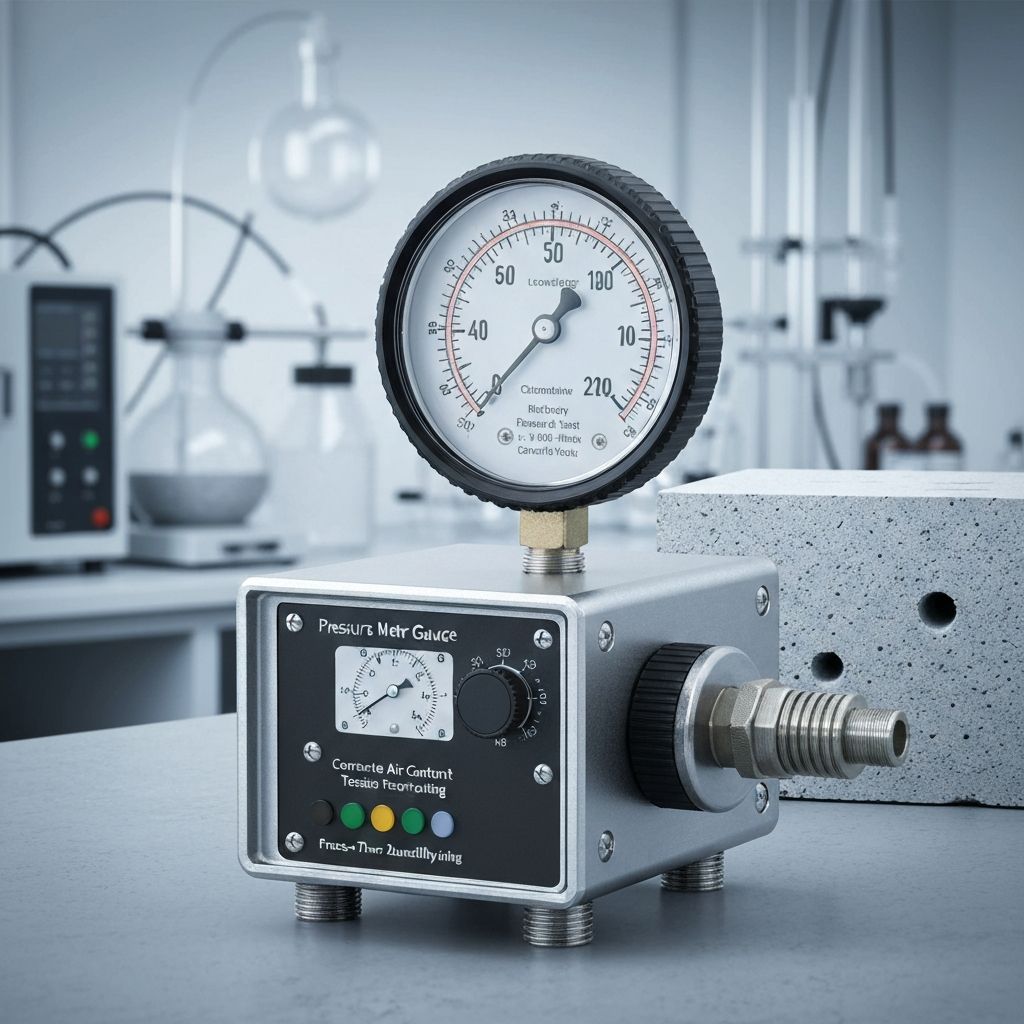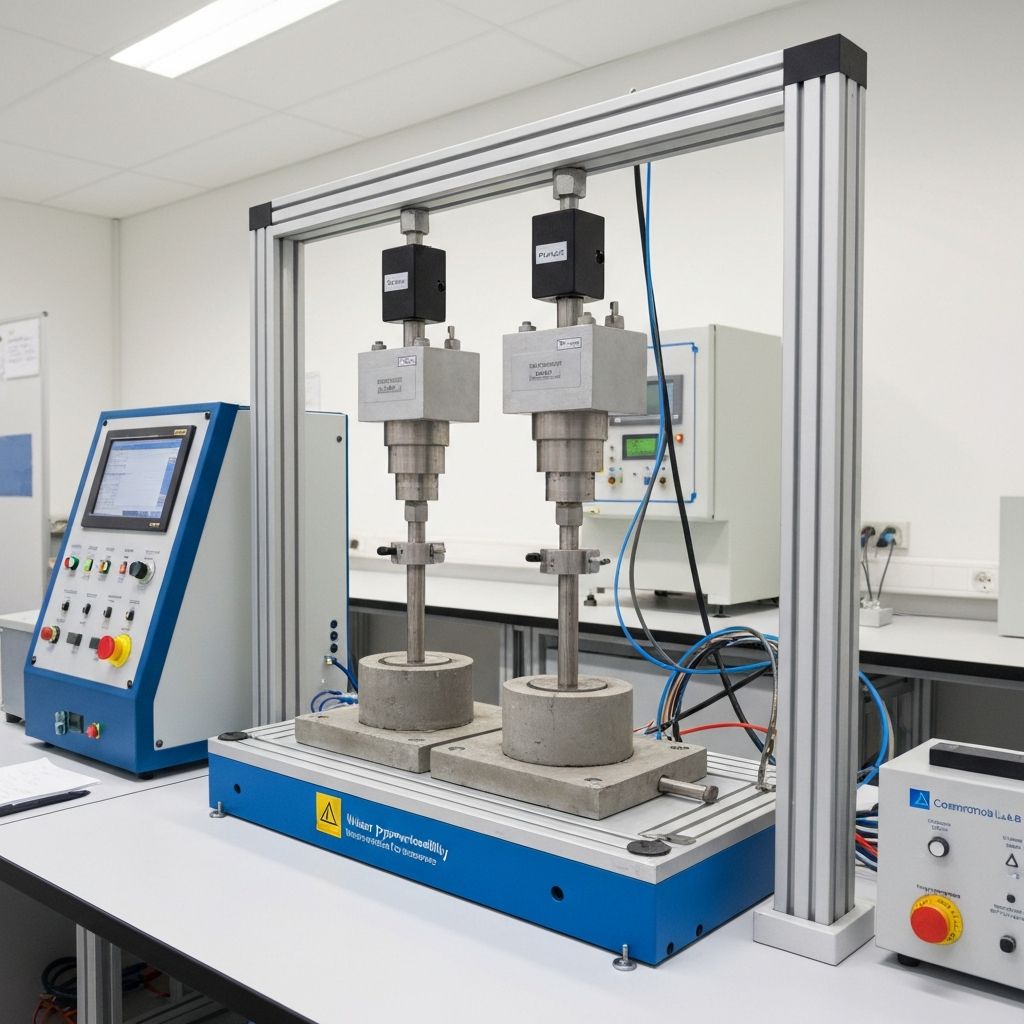
Water permeability testing evaluates concrete's resistance to water ingress, which is fundamental to long-term durability. Low permeability prevents corrosion of reinforcement, protects against freeze-thaw damage, and resists chemical attack from aggressive environments. This testing is critical for water-retaining structures, basements, marine structures, and all concrete exposed to moisture.
Why Permeability Testing Matters
Concrete permeability controls the rate at which water, oxygen, carbon dioxide, and chlorides penetrate the material. High permeability leads to steel corrosion, reduced strength, and shortened service life. Impermeability is achieved through low water-cement ratio, proper compaction, adequate cement content, and sufficient curing. Testing verifies these factors were properly controlled during construction.
Water Penetration Depth Test
The most common method (EN 12390-8, DIN 1048) subjects concrete specimens to water pressure for 72 hours, then splits them to measure penetration depth. Specimens are 150mm cubes or cylinders, with one face exposed to 500 kPa water pressure. After testing, the specimen is split and the penetration front made visible with silver nitrate solution. Maximum and average penetration depths are recorded.
- Good quality concrete: <25mm penetration
- Acceptable concrete: 25-50mm penetration
- Poor quality concrete: >50mm penetration
- Waterproof concrete specification: typically <30mm maximum
Permeability Coefficient Testing
The coefficient of permeability (k) quantifies water flow rate through concrete under hydraulic gradient. Testing follows EN 12390-8 or similar standards. Values range from 10⁻¹⁰ m/s for high-quality impermeable concrete to 10⁻⁸ m/s for normal concrete. Parking structures, basements, and water tanks require k < 10⁻¹¹ m/s.
Factors Affecting Permeability
Water-cement ratio is the dominant factor - reducing w/c from 0.60 to 0.45 can reduce permeability by 100 times. Cement type, admixtures (especially silica fume and fly ash), aggregate quality, curing conditions, and placement quality all significantly influence permeability. Cracks and honeycombing create direct pathways for water ingress regardless of matrix permeability.
Conclusion
Permeability testing ensures concrete provides adequate protection for reinforcement and resists environmental attack. Our laboratory performs water penetration testing to European and international standards. Contact us for comprehensive durability testing.
Related Testing Services
- Chloride Penetration Testing
- Carbonation Depth
- Sorptivity Testing
- Freeze-Thaw Testing
Applicable Standards
Need This Testing Service?
Our accredited laboratories and field teams provide comprehensive testing services across Europe.
Contact Our Team