Core sampling involves drilling cylindrical specimens from hardened concrete structures to assess in-situ strength and quality. It's performed when cube test results are questionable, for forensic investigations, structural assessments of existing buildings, and verification of suspect concrete. Core testing provides the most reliable measure of actual concrete strength in the structure.
When Core Sampling is Required
Core testing is necessary when: cast cube tests fail to meet specified strength; concrete placement was questionable; fire or chemical damage is suspected; structural assessment of existing buildings is needed; or forensic investigation of failures is conducted. Cores can also evaluate concrete uniformity, detect voids or honeycombing, and verify concrete quality in dispute situations.
Core Extraction Procedure
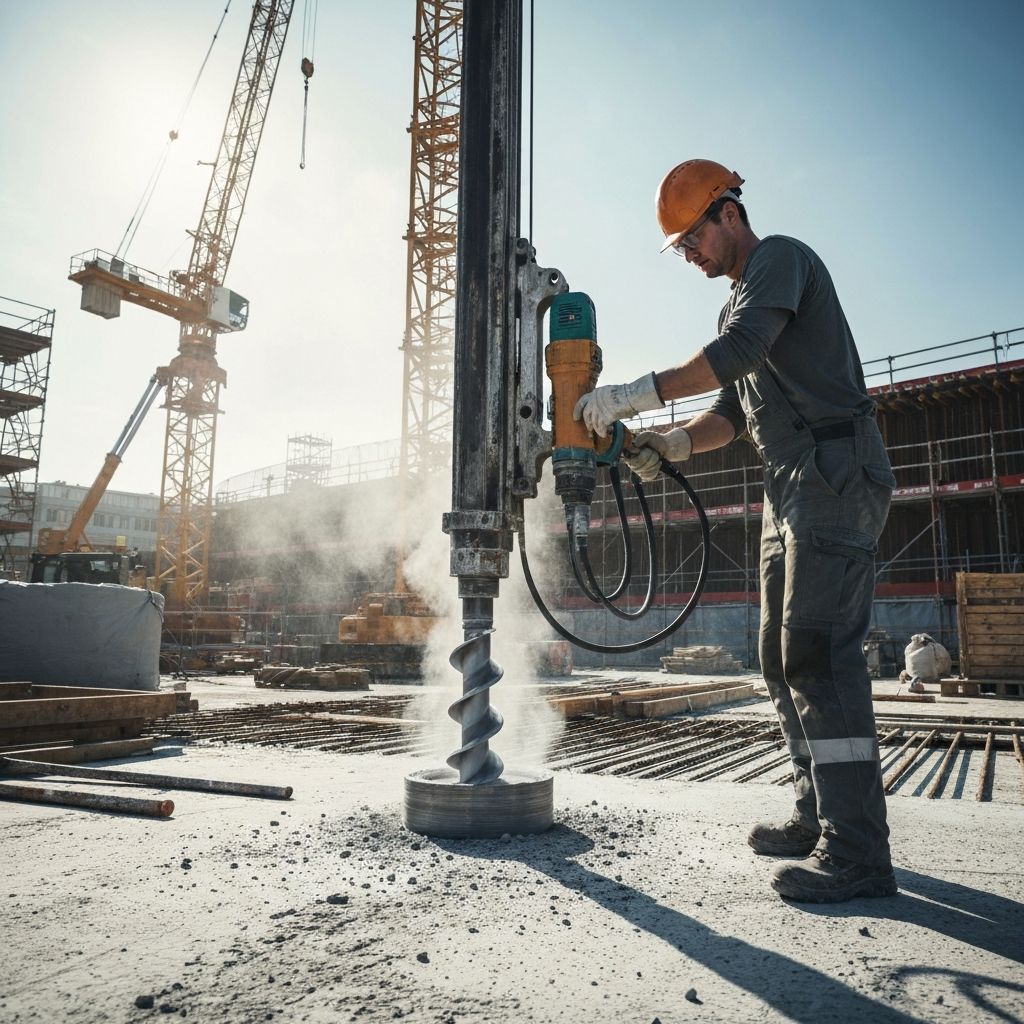
Cores are drilled using diamond-tipped rotary core barrels with water cooling. Standard diameter is 100mm or 150mm, with length at least equal to diameter (preferably twice diameter for accurate results). Core locations are chosen to avoid reinforcement where possible, but reinforcement can be cut if necessary. The drilling operator must be experienced to avoid damaging the specimen or structure.
- Core location survey to avoid major reinforcement (cover meter or GPR)
- Water-cooled diamond drilling perpendicular to concrete surface
- Careful extraction without vibration or impact damage
- Immediate labeling and protection during transport
- Storage in moisture-controlled conditions matching site exposure
Core Testing and Strength Interpretation
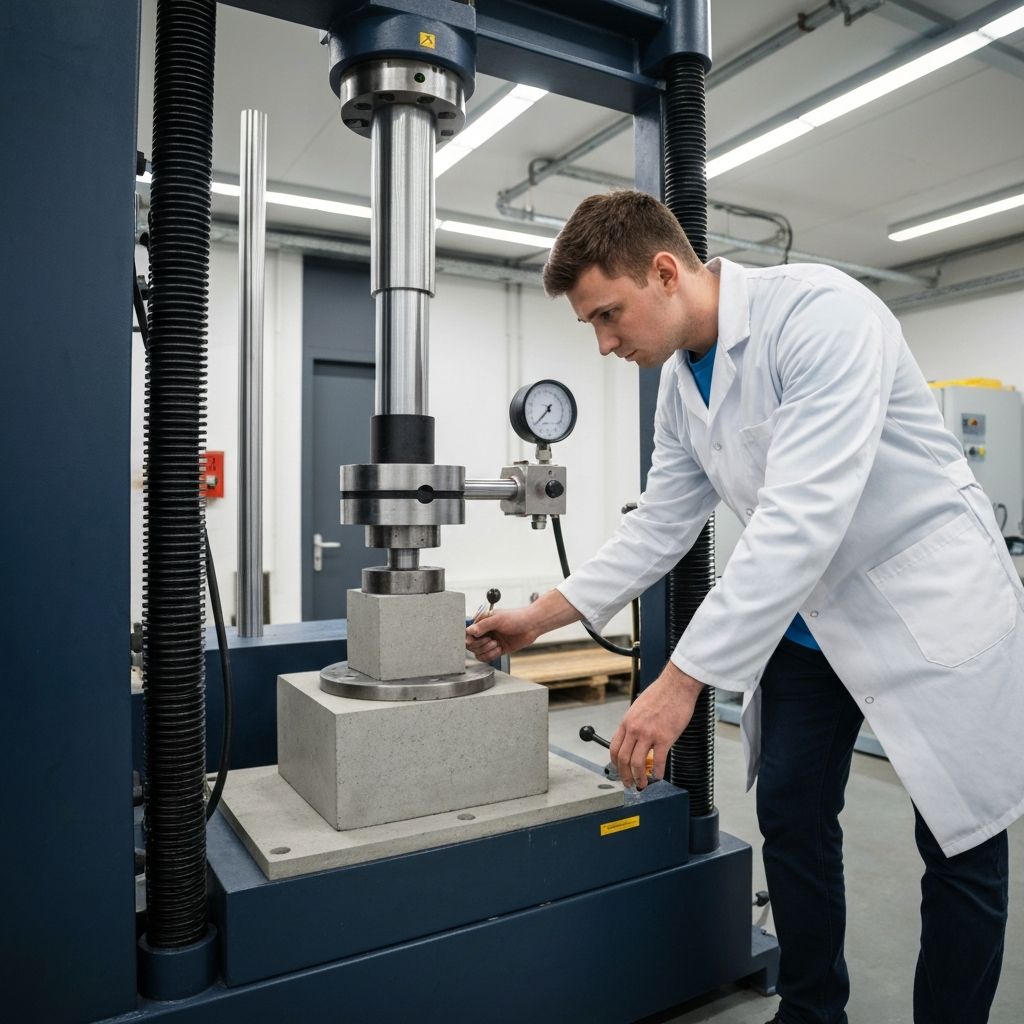
Cores are prepared by cutting and grinding both ends perpendicular to the axis. Length-to-diameter ratio affects results; correction factors are applied for L/D < 2.0. Cores are tested in compression following EN 12504-1. In-situ strength is typically 85-95% of equivalent cube strength due to drilling damage, different moisture state, and size effects. EN 13791 provides statistical methods for compliance assessment from core results.
Assessment and Reporting
Core test results are compared with design strength requirements after applying appropriate conversion factors. A minimum of three cores per investigation area is recommended. Results show considerable variability due to concrete heterogeneity and local conditions. Comprehensive reports document core locations, visual observations, test results, and structural adequacy assessment. Cores may also be used for petrographic analysis, chloride content, and carbonation depth testing.
Conclusion
Core sampling provides definitive evidence of in-situ concrete quality when other testing raises concerns. Our experienced technicians perform non-destructive location surveys, precision core extraction, and accredited testing. Contact us for concrete core drilling and testing services.
Related Testing Services
- Compressive Strength Testing
- Rebound Hammer Testing
- Ultrasonic Pulse Velocity
- Petrographic Analysis
Applicable Standards
Need This Testing Service?
Our accredited laboratories and field teams provide comprehensive testing services across Europe.
Contact Our Team