Carbonation is the chemical reaction between atmospheric carbon dioxide and calcium hydroxide in concrete, gradually reducing pH from 12-13 to below 9. When carbonation reaches reinforcing steel, the protective passivation layer is destroyed, allowing corrosion to begin. Carbonation depth testing assesses durability of existing structures and predicts remaining service life before corrosion initiates.
The Carbonation Process
CO₂ diffuses through concrete pores, reacting with calcium hydroxide to form calcium carbonate. This progresses inward from exposed surfaces over years or decades. Carbonation rate depends on concrete quality, moisture content, cement type, and CO₂ concentration. Urban environments with higher CO₂ accelerate carbonation. The process is irreversible and continuous throughout the structure's life.
Testing Methodology
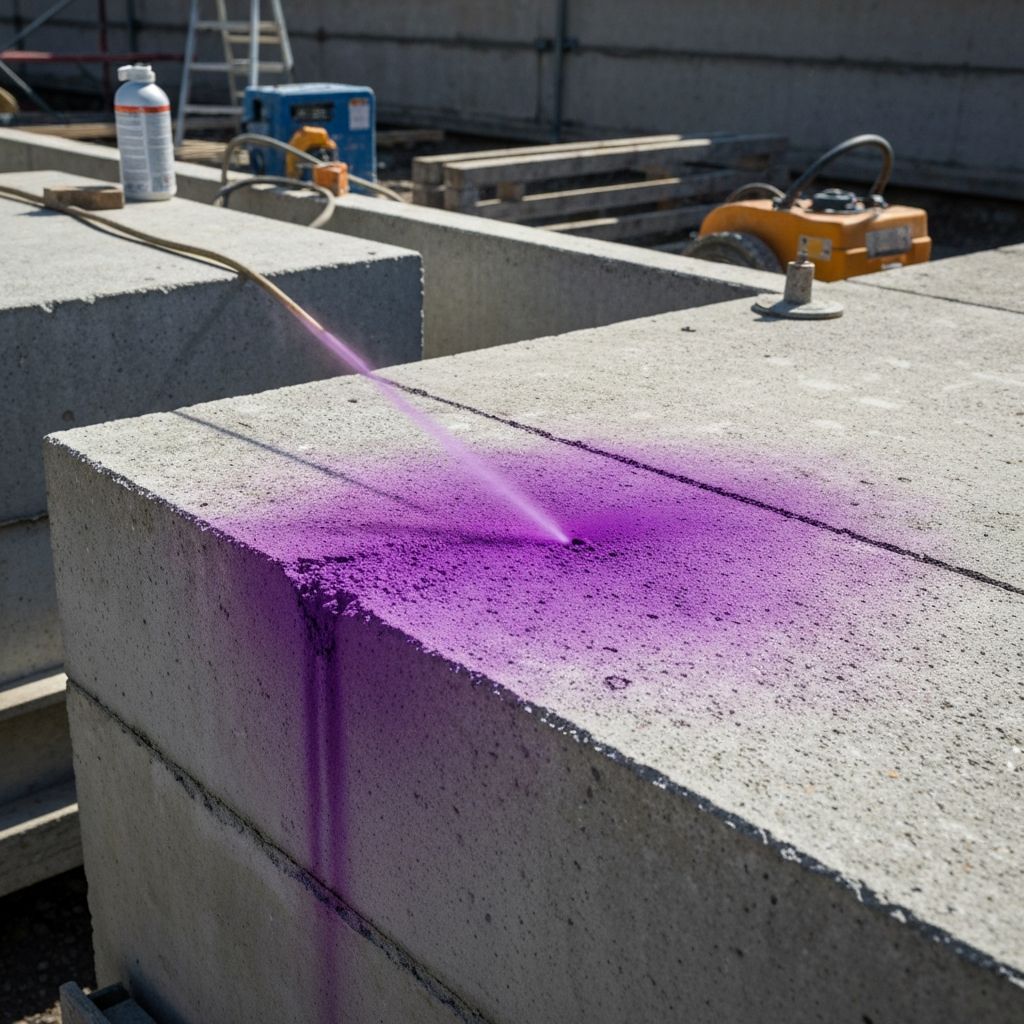
Carbonation depth is measured using the phenolphthalein indicator method (EN 14630). A freshly broken or drilled surface is sprayed with 1% phenolphthalein in ethanol solution. Uncarbonated concrete (pH >9.2) turns purple-pink, while carbonated concrete (pH <9.2) remains colorless. The boundary between colored and uncolored zones indicates carbonation front. Measurements are taken at multiple locations and depths averaged.
- Clean and dry freshly exposed concrete surface
- Apply phenolphthalein indicator spray uniformly
- Wait 30 seconds for color development
- Measure depth of colorless zone to nearest 1mm at multiple points
- Calculate average carbonation depth for each exposure condition
Evaluating Structural Risk
Risk assessment compares carbonation depth to concrete cover over reinforcement. If carbonation has reached or exceeded cover depth, corrosion is likely active or imminent. Remaining life before carbonation reaches steel can be predicted using square-root time law: X = k√t, where X is depth, t is time, and k is carbonation coefficient. This projection guides maintenance planning and repair decisions.
Factors Affecting Carbonation Rate
Water-cement ratio strongly influences carbonation - high w/c ratios carbonate much faster. Cement content and type affect alkalinity reserves. Supplementary cementitious materials can increase carbonation rate but improve other durability properties. Concrete quality (compaction, curing) dramatically affects carbonation resistance. Sheltered, dry concrete carbonates faster than wet exposed concrete where pores are water-filled.
Conclusion
Carbonation testing is essential for condition assessment and service life prediction of concrete structures. Our field technicians perform carbonation depth surveys on existing buildings with comprehensive reporting. Contact us for structural durability assessments.
Related Testing Services
- Concrete Cover Measurement
- Half-Cell Potential
- Chloride Content Analysis
- Core Sampling
Applicable Standards
Need This Testing Service?
Our accredited laboratories and field teams provide comprehensive testing services across Europe.
Contact Our Team